

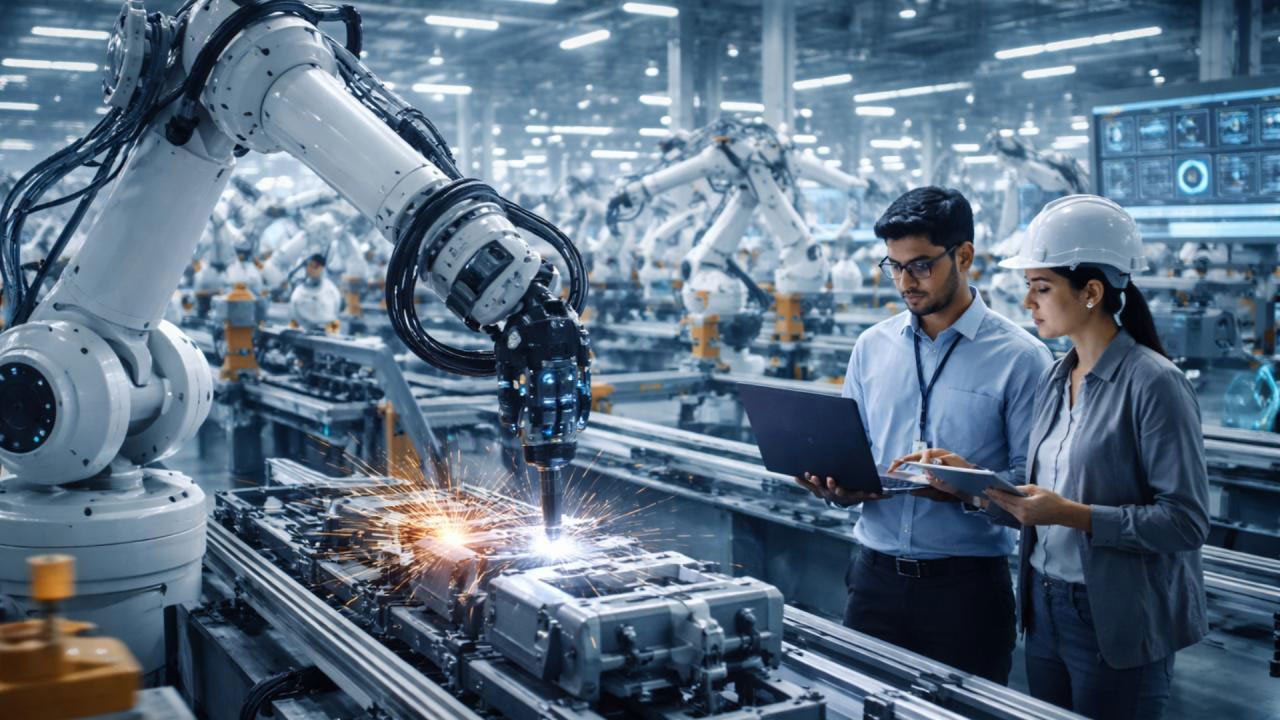
India’s ambition to become a global manufacturing powerhouse is no longer confined to policy discussions or economic projections. From electronics and automobiles to pharmaceuticals, defense equipment, semiconductors and industrial machinery, manufacturing has become central to the country’s economic aspirations. Government incentives, production-linked investment schemes, infrastructure development and efforts to attract global manufacturers are gradually reshaping India’s industrial landscape. At a time when global companies are reconsidering their supply chains and diversifying production networks, India has an opportunity to establish itself as a much larger participant in global manufacturing.
The opportunity is significant, but so is the challenge. Attracting investments, establishing industrial facilities and expanding production capacity are important steps towards building a competitive manufacturing ecosystem. However, the ability to manufacture more does not automatically translate into the ability to manufacture better, faster or more efficiently. As global competition intensifies, India’s manufacturing ambitions will increasingly be judged not only by the scale of its industrial expansion but also by the productivity and value generated by its factories.
This raises a fundamental question that deserves greater attention: Can India become a global manufacturing powerhouse if its factories do not become significantly more productive?
Manufacturing competitiveness is not determined simply by the number of factories a country operates or the volume of products it produces. It also depends on how effectively manufacturers utilize labor, machinery, materials, energy and time to create value. The next phase of India’s industrial growth may therefore depend less on building additional manufacturing capacity and more on transforming the productivity of the capacity it already has.
The manufacturing opportunity is real. So is the productivity challenge.
India’s manufacturing sector has recorded meaningful expansion, supported by investments, domestic demand and growing participation in global supply chains. Several industries are positioning themselves to take advantage of changing international trade dynamics, while the government’s manufacturing-focused initiatives are encouraging businesses to establish and expand domestic production capabilities. However, the larger question is whether this expansion is accompanied by sufficiently strong improvements in productivity.
The Ministry of Statistics and Programme Implementation’s Annual Survey of Industries (ASI) 2024–25 provides an important perspective on this issue. According to its published results, the manufacturing corporate sector recorded 9.28% growth in gross value added (GVA) over the previous year. Net value added per operating factory increased by 6.59%, while GVA per person engaged grew by 2.25%. At the same time, the number of factories in operation increased by 3.45%, and the number of persons engaged increased by 7.57% in this corporate segment.
These figures indicate that manufacturing activity is expanding, although the relationship between increased employment, capital investment and value creation deserves closer examination. Growth in total production and growth in productivity are not necessarily the same thing. A manufacturing sector can expand by employing more people, installing additional machinery and opening new facilities without achieving a proportionate improvement in the value generated from its resources. GVA per person engaged is a useful value-based indicator, although changes in prices and the composition of industries can influence it and should be considered when interpreting the results.
The broader implication is that India’s manufacturing ambitions require a stronger focus on operational efficiency and value creation. Increasing production capacity is necessary, but manufacturers must also improve equipment utilization, reduce production losses, manage resources more effectively and consistently deliver products that meet international standards. These capabilities will increasingly determine whether Indian manufacturers can compete with established industrial economies.
The hidden divide between India’s large factories and smaller manufacturers
One of the most revealing characteristics of India’s manufacturing landscape is the difference between large industrial enterprises and smaller manufacturing establishments. While large companies often have access to substantial capital, specialized technical expertise and established technology infrastructure, smaller manufacturers operate under very different financial and operational constraints. This difference becomes particularly important when examining the ability of the manufacturing ecosystem to adopt modern technologies and improve productivity.
The ASI 2024–25 results indicate that factories with investment in plant and machinery of up to ₹5 crore account for approximately 78.69% of operating factories. However, they represent only 10.55% of total fixed capital and contribute 19.24% of gross output and 17.61% of net value added. By comparison, factories with investment of ₹10 crore or more account for just 15.84% of operating factories but contribute 76.82% of gross output and 78.07% of net value added.
These figures should not be interpreted as direct evidence that smaller factories are technologically inferior. Different manufacturing industries have different capital requirements, production models and levels of complexity. Nevertheless, they highlight the concentration of manufacturing investment and value creation among larger establishments, while a substantial proportion of factories operate with a comparatively smaller share of the sector’s capital and output.
The implications become more significant when considering the technology investments required to modernize manufacturing operations. For a large automotive manufacturer, introducing industrial automation, predictive maintenance or an integrated production management platform may represent a strategic investment with a measurable long-term return. For a smaller component manufacturer supplying that same automotive ecosystem, similar investments may be financially difficult, technically complex or disruptive to existing operations.
This creates a productivity divide that could influence the competitiveness of entire manufacturing supply chains. India’s manufacturing strength cannot depend exclusively on the capabilities of its largest industrial enterprises. Component manufacturers, contract manufacturers, specialized suppliers and smaller industrial businesses also contribute to the reliability, quality and efficiency of the broader ecosystem. If these businesses cannot modernize at a reasonable pace, the benefits of technological advancement may remain concentrated among a relatively small group of manufacturers.
For India to establish globally competitive manufacturing ecosystems, technology adoption must become accessible to smaller enterprises as well. This will require more affordable solutions, appropriate financing mechanisms, technical support and implementation models that recognize the operational realities of smaller manufacturers.
Technology adoption is not the same as digital transformation
Technology has become an essential component of modern manufacturing, but purchasing technology does not automatically make a factory more productive. Manufacturers can invest in industrial robots, automated production lines, enterprise software, connected sensors, analytics platforms and artificial intelligence without necessarily achieving meaningful improvements in operational performance. The difference lies in how effectively these technologies are integrated into the organization’s processes and decision-making systems.
A factory may operate sophisticated machinery while continuing to depend on spreadsheets for production scheduling. It may have an ERP system but lack real-time visibility into shop-floor activities, equipment utilization or material consumption. It may collect thousands of production data points without using them to identify recurring equipment failures, production bottlenecks or quality issues. In some cases, individual departments introduce digital tools independently, creating additional information silos instead of improving coordination across the business.
Such investments often result in technology being treated as another layer of expenditure rather than a source of competitive advantage. The underlying problem is that digital transformation is sometimes approached as an IT implementation exercise rather than a fundamental business improvement initiative.
Research by PwC India in its report Reimagining Digital Factories of Tomorrow – The Indian Perspective, based on a 2023 survey, highlighted the gap between digital ambition and implementation. The study found that 38% of surveyed Indian firms had yet to create a digital transformation roadmap. Although 54% reported an upward implementation trend in analytics and artificial intelligence, the research also highlighted the difficulties businesses face in translating digital investments into meaningful returns when technology initiatives are not sufficiently aligned with business strategy.
The lesson is particularly relevant for manufacturers embarking on digital transformation. The objective should not be to introduce as many technologies as possible, but to identify the operational problems that are preventing the organization from becoming more efficient. Manufacturers must understand where production time is being lost, why equipment remains underutilized, how inventory decisions affect working capital and where quality issues increase operating costs. Technology should then be introduced to address these challenges through measurable improvements.
A successful digital transformation programme must therefore connect business objectives, operational processes, technology infrastructure and workforce capabilities. Without this alignment, even substantial investments in modern manufacturing technologies can produce disappointing results.
The factory of the future will be built around data
Consider two manufacturing facilities producing similar products with comparable production capacity, machinery and workforce strength. The first facility manages its operations primarily through periodic reporting, manual coordination and departmental information systems. Production managers receive updates from different teams, maintenance personnel respond when equipment fails, and inventory decisions rely heavily on historical consumption patterns and manual estimates. Although the facility may have modern machinery, its ability to respond quickly to operational problems remains limited by the quality and availability of information.
The second facility operates through a connected digital environment in which production equipment, inventory systems, procurement processes, quality management and enterprise planning are integrated. Managers can monitor machine performance, identify emerging production bottlenecks, understand material availability and respond to operational deviations before they develop into expensive problems. The fundamental difference between these two facilities may not be their production capacity or the number of machines they possess, but the quality of operational intelligence available to the people managing them.
This is the foundation of the smart factory. Industrial Internet of Things (IIoT) technologies allow manufacturers to collect information from connected equipment, including machine performance, temperature, vibration, energy consumption and operating conditions. When this information is integrated with production management and enterprise systems, it becomes possible to identify inefficiencies and make more informed operational decisions. Similarly, Manufacturing Execution Systems (MES) connect production planning with shop-floor activities, providing visibility into production orders, work-in-progress, quality checks and equipment performance.
Enterprise Resource Planning (ERP) systems play an equally important role by integrating procurement, inventory, finance, production planning, sales and supply-chain operations. Rather than allowing departments to operate with disconnected information, an integrated ERP environment provides a common operational view of the business. This becomes particularly valuable when manufacturers need to coordinate material availability, production schedules, supplier commitments and customer deliveries.
Predictive maintenance and advanced analytics can further improve equipment utilization by identifying patterns that indicate potential machine failures. Instead of depending entirely on fixed maintenance schedules or responding only after equipment breakdowns, manufacturers can use operational data to make more informed maintenance decisions. Artificial intelligence can also support demand forecasting, production scheduling, automated quality inspection and anomaly detection, provided that reliable data and appropriate systems integration are available.
Digital twins offer another opportunity by creating virtual representations of machines, production lines or entire manufacturing facilities. These models can help businesses simulate operating conditions, assess the potential impact of changes and identify opportunities for optimization before implementing them physically. However, these technologies should not be adopted simply because they are associated with Industry 4.0. India has also established initiatives such as SAMARTH Udyog Bharat 4.0 to demonstrate, evaluate and encourage the adoption of smart manufacturing technologies, particularly among MSMEs. For a manufacturer struggling with equipment downtime, predictive maintenance may deliver more immediate value than an expensive AI initiative. For another facing poor material planning and excess inventory, ERP integration may produce a much more meaningful improvement.
The technology roadmap must therefore begin with the factory’s productivity challenges rather than the technology vendor’s product catalogue.
Automation will not solve a process that is already inefficient
There is a tendency to equate manufacturing modernization with automation. Industrial robots, automated assembly lines, computer-controlled machinery and advanced production equipment are important components of modern manufacturing, but automation alone cannot compensate for poorly designed processes. In fact, automating an inefficient production process can simply make inefficiency occur faster, without addressing the underlying reasons for operational losses.
Manufacturers must first understand how work moves through their facilities and where resources are being wasted. Production bottlenecks, excessive material movement, equipment idle time, recurring quality defects, unnecessary manual intervention and delays between production stages can all reduce overall efficiency. These issues require a combination of operational discipline, process improvement and appropriate technology rather than automation investments alone.
Lean manufacturing principles, continuous improvement, standardized work procedures and systematic quality management remain essential to this process. They help organizations identify non-value-adding activities, reduce production waste and establish more consistent operating practices. Digital systems can strengthen these practices by making operational information more accessible and enabling managers to identify deviations more quickly.
The most productive factories will therefore not necessarily be those with the highest degree of automation. They will be those that combine appropriate automation with efficient processes, capable workers and reliable operational information. Technology should strengthen operational discipline rather than become a substitute for it.
India’s manufacturing ambitions also depend on its workforce
Technology-driven manufacturing is frequently discussed as a question of machinery, capital investment and infrastructure, but people remain central to industrial productivity. A connected factory requires workers who can operate digital equipment, technicians who can interpret machine data, engineers who understand automation and managers who can translate operational information into better decisions. As manufacturing systems become more sophisticated, the skills required across the industrial workforce will also change.
Traditional shop-floor capabilities will remain important, but they increasingly need to be complemented by digital literacy, industrial automation, data interpretation, systems integration and problem-solving skills. Manufacturers introducing connected machinery or automated production systems must also ensure that their employees understand how to operate, monitor and maintain these technologies. Otherwise, technology investments may remain underutilized or create new operational dependencies on a limited number of specialized personnel.
The OECD’s 2026 assessment of India’s growth and competitiveness identifies skill shortages as one of the constraints affecting firms’ ability to expand, adopt new technologies and generate employment. It also highlights gaps in technical and vocational training relevant to advanced manufacturing. This reinforces the need for closer collaboration between manufacturers, educational institutions, industrial training organizations and technology providers.
Workforce development must become an integral part of manufacturing modernization rather than an activity undertaken after technology has been implemented. Employees need opportunities to acquire new skills, understand changing production processes and participate in continuous improvement initiatives. The objective should not simply be to replace manual activities, but to enable workers to perform more complex, higher-value tasks while improving the productivity and quality of industrial operations.
India’s demographic advantage will translate into a manufacturing advantage only when its workforce possesses the skills required by modern industry. This will require sustained investment in technical education, vocational training and industry-aligned capability development.
The supply chain is part of the productivity equation
A manufacturing facility does not operate in isolation. Its productivity depends on the availability of raw materials, the reliability of suppliers, transportation networks, warehousing, quality standards and the ability to coordinate production with demand. Even a highly automated facility can experience significant operational disruption if suppliers cannot deliver components on time or if material shortages interrupt production schedules.
Similarly, a manufacturer may have sufficient production capacity but still lose competitiveness because inventory is poorly managed, procurement decisions are disconnected from actual demand or finished goods remain delayed in distribution. These problems demonstrate why manufacturing productivity cannot be evaluated exclusively at the factory level. It must also be understood in the context of the wider supply chain.
Digital supply-chain platforms, supplier integration, inventory visibility, demand forecasting and warehouse management systems can help manufacturers coordinate activities across their operating ecosystems. When procurement, inventory, production and logistics information are connected, businesses can make better decisions about material requirements, stock levels and delivery commitments. This can reduce unnecessary inventory accumulation, improve production continuity and strengthen relationships with suppliers.
For smaller suppliers, access to digital systems and standardized data exchange becomes particularly important when working with large manufacturers that operate sophisticated procurement, compliance and quality management processes. As global supply chains increasingly demand traceability, reliability and consistent quality, smaller manufacturers will need to improve their ability to exchange information and coordinate operations with larger customers.
The competitiveness of India’s manufacturing sector will increasingly depend on how effectively these interconnected networks operate together, rather than on the capabilities of individual factories alone.
The MSME challenge: Technology must become accessible, not aspirational
The manufacturing productivity debate eventually leads to India’s micro, small and medium enterprises, which play a critical role in industrial supply chains, manufacturing clusters and employment generation. These businesses produce components, specialized products and intermediate goods that support larger manufacturing operations. Their ability to modernize is therefore important not only for their own competitiveness but also for the overall strength of India’s industrial ecosystem.
However, smaller manufacturers often face practical barriers when considering digital transformation. Limited capital, a shortage of skilled technical personnel, legacy machinery, fragmented information systems and uncertainty about the return on technology investments can make modernization difficult. Even when business owners recognize the need for better production planning, inventory management or quality monitoring, they may struggle to identify suitable solutions and implementation partners.
For these businesses, the answer cannot be to replicate the technology architecture of a large multinational manufacturer. They need affordable, modular and scalable solutions that address specific operational challenges without introducing unnecessary complexity. A smaller manufacturer may begin by digitizing inventory and procurement, introducing production planning software or implementing basic shop-floor monitoring. Another may prioritize quality management, maintenance scheduling or supplier coordination.
The important consideration is to establish a clear progression in which technology investments produce measurable improvements before additional complexity is introduced. Industry associations, manufacturing clusters, technology providers, educational institutions and government programmes can help accelerate this transition by making expertise, financing and implementation capabilities more accessible to smaller enterprises.
There is also an opportunity for technology companies to develop solutions specifically for India’s smaller manufacturers. Rather than selling complex enterprise systems that require substantial customization and infrastructure investment, technology providers can focus on practical manufacturing requirements, easier implementation, integration with existing machinery and affordable ongoing support. This could make digital transformation more accessible to a much wider section of the manufacturing ecosystem.
The next wave of manufacturing productivity improvements may therefore come not only from India’s largest industrial facilities but also from thousands of smaller enterprises becoming more efficient, connected and capable of meeting the requirements of modern supply chains.
What Indian manufacturers should measure differently
One of the barriers to improving manufacturing productivity is the way organizations evaluate operational performance. Many manufacturers monitor revenue, production volumes, orders received and installed capacity, which are important business indicators but do not always reveal where productivity is being lost. A factory may report increased output while simultaneously experiencing higher material wastage, excessive equipment downtime, quality problems or rising inventory costs. Without a more comprehensive understanding of operational performance, management decisions may focus on increasing production rather than improving the efficiency of the entire manufacturing process.
A stronger measurement framework should include indicators such as Overall Equipment Effectiveness (OEE), production cycle time, first-pass yield, machine downtime, inventory turnover, on-time delivery, energy consumption per unit and labor productivity. These metrics provide a more detailed understanding of equipment utilization, production efficiency, quality performance and resource consumption. They also help manufacturers identify whether operational improvements are translating into better business outcomes.
However, measuring these indicators should not become another exercise in generating disconnected reports. The real value comes when production managers can identify a deterioration in performance, understand its underlying cause and take corrective action. For example, an increase in equipment downtime may indicate recurring maintenance problems, while a decline in first-pass yield could point to issues in production settings, material quality or workforce training. Similarly, excessive inventory levels may reveal weaknesses in demand forecasting, procurement planning or coordination between production and sales.
An integrated digital manufacturing environment can connect these indicators with everyday operational decisions, allowing businesses to move beyond retrospective reporting towards more informed and timely management. The objective is to create an organization in which productivity information is used consistently across departments, rather than being restricted to periodic management reviews.
The next manufacturing advantage will belong to intelligent operators
India’s manufacturing opportunity is significant, but global competitiveness will demand more than favorable investment conditions and expanding industrial capacity. Manufacturers will increasingly compete on the consistency of their output, the quality of their products, the efficiency of their operations, the reliability of their supply chains and their ability to respond to changing customer requirements. Technology will influence every one of these dimensions, but the companies that benefit most will not necessarily be those that spend the most on digital systems or automation.
The real advantage will belong to manufacturers that understand their operational challenges, select appropriate technologies, integrate their systems, develop their workforce and continuously measure the outcomes. This requires a shift in how manufacturing transformation is approached, moving away from isolated technology projects towards a broader strategy that connects business objectives with operational performance. Digital transformation must become part of the organization’s operating model rather than remain the responsibility of its IT department.
India’s industrial policy ambitions and enterprise-level decisions must also converge. Government incentives can encourage investment in manufacturing capacity, infrastructure development can reduce logistics constraints, skill development initiatives can improve workforce readiness and research and development can strengthen industrial innovation. However, individual manufacturers must translate these opportunities into more efficient factories, stronger supply chains and increasingly productive businesses.
India has the potential to become a major global manufacturing destination, but the scale of that opportunity will ultimately depend on the quality of its industrial transformation. Expanding capacity is necessary, yet improving productivity, adopting appropriate technologies and creating a digitally capable workforce will be equally important. The next phase of manufacturing growth must focus not simply on producing more, but on creating greater value from every unit of labor, capital and resource deployed.
India’s manufacturing future will not be determined by how many factories it builds, but by how intelligently and productively those factories operate.